 With the Cherubic Hymn, Plagal 1st — St. Nicholas National Shrine


Description
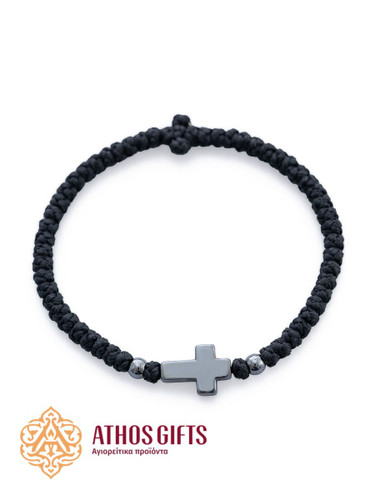
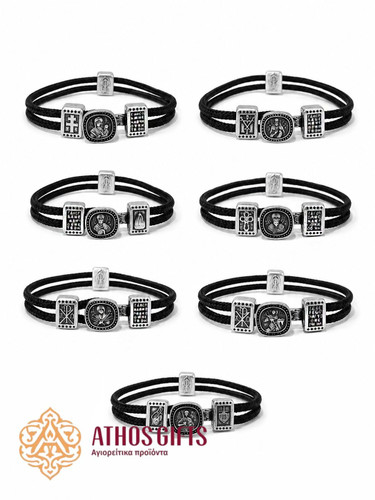
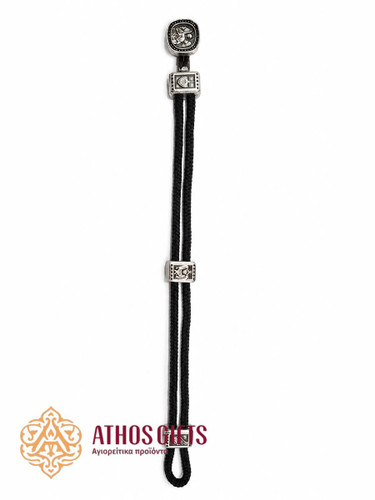
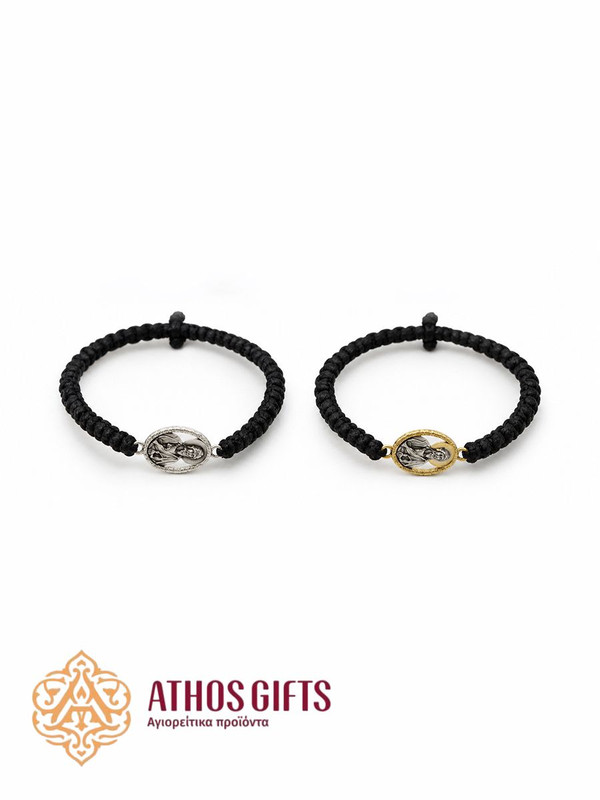
The bracelet consists of small knots and an icon, which makes it not just a piece of jewelry, but a Christian symbol of faith. Thanks to a special braiding technique, the bracelet can be easily stretched by increasing the distance between the knots. This means it's is suitable for different wrist sizes.
The piece is available in two variations: classic 925 sterling silver for lovers of simplicity, or gold-plated silver for those who prefer a warm glow.
Komboskini bracelets
The name of the Greek "komboskini" bracelets reflects their essence and purpose: in Greek, kombos (κόμπος) means "knot", and skini (σχοινί) is a rope or cord.
Bracelets are braided in a special way: each knot consists of 9 crosses of cord, symbolizing the nine crosses, or nine angelic ranks. Often seed beads, little crosses or icons are woven into the bracelet.
Komboskini bracelets are usually worn on the wrist of the left hand, as it's closer to the heart. Believers often give such bracelets to their family and friends to remember and pray for them.
Saint Andrew
Particles of Saint Andrew's relics are kept in the skete of St. Andrew in Mount Athos, which belongs to the holy monastery of Vatopaidi.
November 30 is the feast day of the Apostle Andrew the First-Called, who, as his honorary title implies, is the first disciple called by Christ.
Andrew the Apostle is considered the founder of the Byzantine Church and the predecessor of the current Ecumenical Patriarch. Each year on his memory day, the Patronal Feast of the Ecumenical Patriarchate is celebrated.
Andrew was a fisherman by profession and a disciple of John the Baptist. It was to him and the later evangelist, John, that the Baptist showed Jesus and revealed that he was the Lamb of God, that is, the Messiah. So, the two disciples left John the Baptist and followed Christ.
Andrew the Apostle was especially connected with Achaia, where he taught and performed many miracles. The wife of the local proconsul was miraculously healed by him, as a result of which she believed in Christ. The proconsul then ordered the saint to be arrested and crucified in the shape of the letter X. This shape now adorns the flag of Scotland, which considers the Apostle Andrew its patron saint.
In 1964, the head of Andrew the Apostle was returned to the Greek city of Patras, where the saint suffered a martyr's death; since January 19, 1980, particles of the Cross are also kept there.
In addition to the city of Patras, of which he is the patron saint, Andrew the Apostle is also associated with the island of Cyprus. According to tradition, he had been there and performed miracles.
Today, in addition to the church in Patras, particles of the relics of Andrew the Apostle are kept in the skete of Saint Andrew in Mount Athos, in the cathedral of Amalfi (Duomo di Sant'Andrea) and in Sartsana in Italy, in the Roman Catholic cathedral of Saint Mary in Edinburgh, Scotland, in the Church of Saint Andrew and Albert in Warsaw, Poland. In addition, many smaller particles of his relics are kept all over the world.
Handmade on Mount Athos and sold by Metamorfosi (Athos Gifts). Ships from Greece within 5 business days, with US duties and taxes prepaid.
Additional Details
- SKU:
- MA-HND-0367
- Origin:
- Mount Athos, Greece